Community use
Not rated yet · Used in 0 manuscripts
Counts reflect distinct manuscripts with saved, linked appearances. Private stories contribute only to the total.
Read stories using this source
- No authors have published reader editions featuring this source yet.
San Francisco — Everyday Connections · researched reference
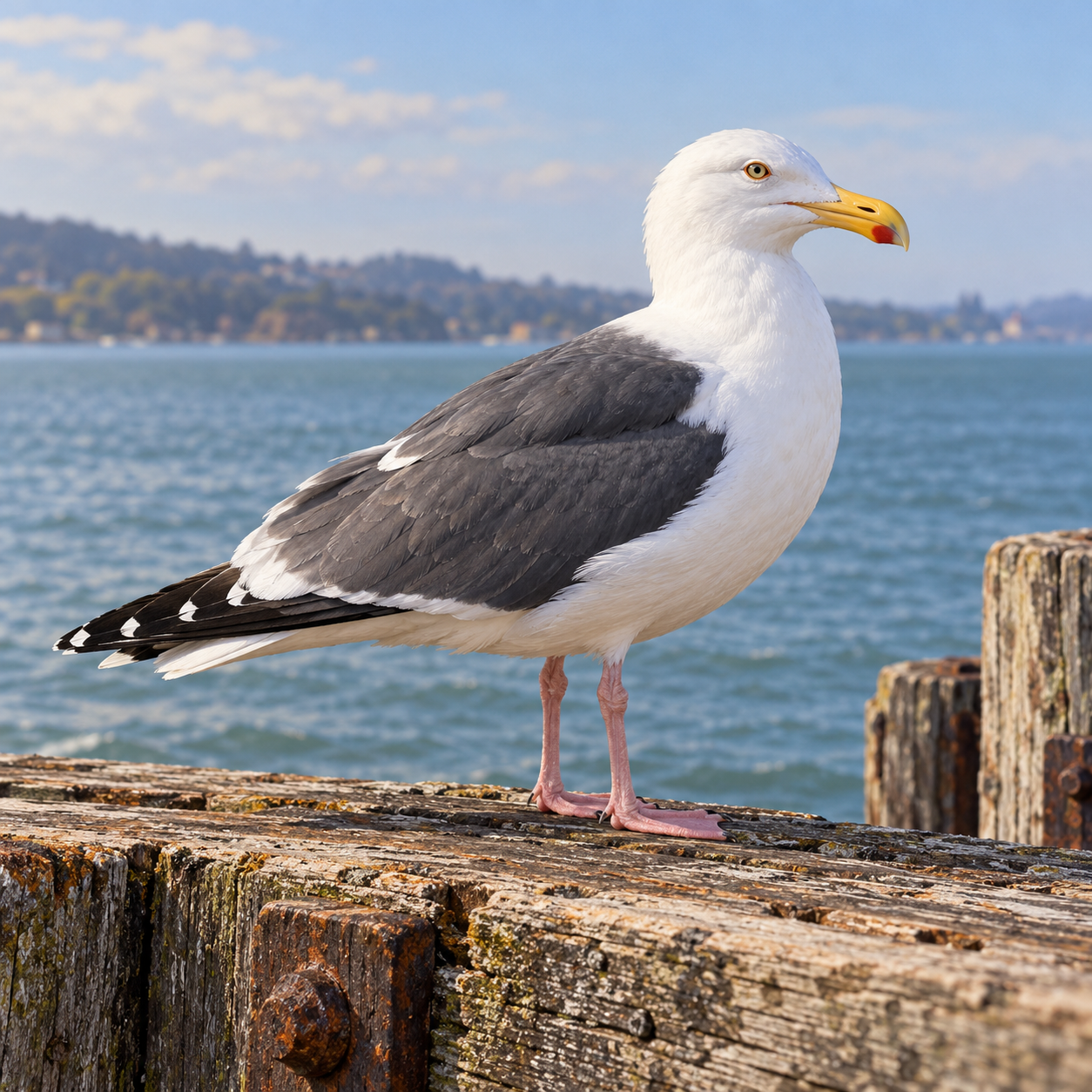
A western gull supplies a recognisable waterfront presence while rewarding attention to species details and ordinary opportunism.
Catalogue details
Scientific name
Larus occidentalis
Fauna type
Bird; coastal gull
Description
This is a species-level reference for a large coastal gull recorded in the Presidio bird guide. A writer can distinguish the bird from a generic white silhouette without assigning human intention to its calls or movements.
Appearance
An adult typically has a white head and body, dark slate upper wings and back, pink legs and a stout yellow bill with a red mark on the lower mandible. Juvenile plumage differs; the illustration depicts an adult.
Abilities
Flies, walks and exploits varied food opportunities. Its ordinary competence can interrupt a carefully controlled human scene.
Typical habitat
Coastal and waterfront settings; local occurrence is supported by the Presidio bird reference.
Diet
Opportunistic feeding, including captured prey and scavenged food; exact meal is scene-specific.
Behavior
NPS describes hunting and scavenging. A gull may watch a food source or shift position on a railing; do not treat every call as a warning about the plot.
Social structure
Can occur around other gulls; a particular colony or breeding state needs its own location and season.
Rarity
Documented locally; abundance not assessed.
General notes
Species record, not a named individual. The writer chooses a season, place and observed behaviour; illustration details do not establish a real occurrence.
Writing with this entry
Scene starters
- A bird’s movement makes a character look toward the person they were avoiding.
- A field recording includes a call that someone recognises only at the broader gull level.
Continuity constraints
- The image depicts adult plumage, not a juvenile or all possible seasonal appearances.
- Species identification from an indistinct sound or distant silhouette may remain uncertain.
Adaptation notes
Use as part of a shared environment. A named or recurring individual should be a separate local interpretation with an explicit fictional status.
Sensory palette
Observe body shape, movement and sound at a distance; exact calls and encounter conditions are scene choices.
Lifecycle
Age, reproductive condition and season are intentionally unspecified for the representative adult image.
Interaction rule
Human characters observe without assuming familiarity or control.
Connections
- Embarcadero waterfront — Species-level setting connection; no dated occurrence asserted.
Research sources
- Western Gull · National Park Service
- Frequent Flyers of the Presidio · National Park Service
Use this in your writing
- Use and adapt text and images within original books, scripts and games, including commercial works.
- Use privately for planning and inspiration.
Conditions
- Retain WABF creator and source-version metadata in the local catalogue.
- Do not claim WABF endorsement or exclusive ownership of real-world facts.
- Standalone resale or redistribution of this asset collection is not included in this offer.
Write and Be Found — San Francisco collection, v1
Retain catalogue provenance; published-work credit is encouraged, with placement chosen by the writer.
Source version 1
While writing in Story Forge, open Insert from catalogue, choose Global, and select Use in this story to create your private adaptation.
Browse fauna