Community use
Not rated yet · Used in 0 manuscripts
Counts reflect distinct manuscripts with saved, linked appearances. Private stories contribute only to the total.
Read stories using this source
- No authors have published reader editions featuring this source yet.
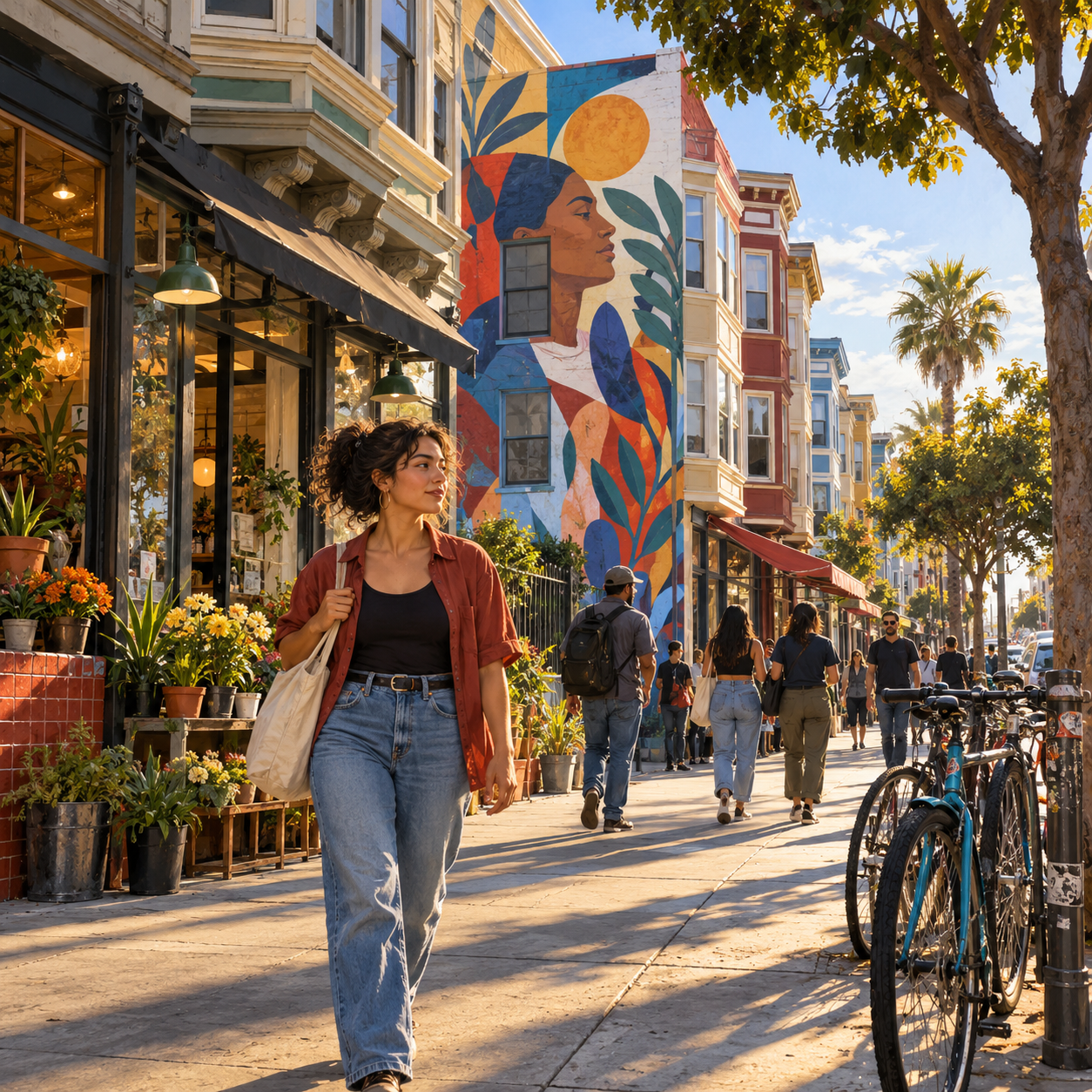
San Francisco — Everyday Connections · researched reference
A layered neighbourhood setting of homes, shops, food and public art, where a shared room can carry several competing versions of local memory.
Catalogue details
Location type
Urban neighbourhood
Sensory summary
A layered neighbourhood setting of homes, shops, food and public art, where a shared room can carry several competing versions of local memory.
Topography terrain
An urban street-and-block setting; exact boundaries are not fixed by this package. Select an actual intersection only after checking geography for the intended scene.
Climate
A sheltered street may feel different from the western coast on the same day. This is a scene option, not a claim that the district always has a particular temperature.
Atmosphere
Public sociability at street level, private routines above and behind shopfronts.
Dominant smells
Authored palette: toasted bread, cooking onions, coffee, warm pavement and a paper-filled archive room.
Ambient sounds
Conversations through an open doorway, kitchen fans, bicycles and music from a passing car. Choose a specific soundscape rather than stacking every cultural cue into one scene.
Typical lighting
Late sun on façades and mixed practical light in shops and meeting rooms.
Common weather
Scene weather is author-selectable and should remain consistent within the story.
Ecosystem notes
Street planting and small gardens form part of an urban setting; no special species distribution is asserted here.
Population density
Closely spaced residential and commercial uses; exact counts not supplied.
Infrastructure level
Urban streets, transit access, commercial kitchens and community spaces.
Architecture style
Low-rise residential and commercial buildings, bay windows and murals provide a visual vocabulary. Generated mural imagery is original artwork, not a reproduction of a specific existing mural.
Transportation notes
Use walking and bicycle connections for local encounters; check real transit routes and travel times before making them plot-critical.
Primary industry economy
Food, shops, services and cultural activity; fictional Bay Ear and Night Table operate within this setting.
Economic status
Varied livelihoods and resources; no character represents the whole neighbourhood.
Agriculture notes
Urban gardens may be introduced as fictional scene details; no specific real site is implied.
History summary
The district has a substantial cultural history that a single catalogue card cannot stand in for. This package supplies a contemporary writing setting and leaves historical claims to specific sources and voices.
General notes
WABF editorial setting reference. Sensory passages are optional writing material; images are generated interpretations. Bay Ear and Night Table are WABF inventions, not existing local institutions.
Writing with this entry
Scene starters
- A listening event brings together people who recognise the same voice for different reasons.
- A kitchen doorway becomes the meeting point between paid work and an unpaid promise.
Continuity constraints
- Bay Ear and Night Table are WABF inventions, not existing local institutions.
- No real mural, business or resident is implicated in the fictional conflicts.
Adaptation notes
Use as a setting base for books, scripts or games. Keep sourced geography distinct from invented premises and incidents; date-check any route, price, opening time or legal rule used in a plot.
Sensory palette
Authored palette: toasted bread, cooking onions, coffee, warm pavement and a paper-filled archive room. Conversations through an open doorway, kitchen fans, bicycles and music from a passing car. Choose a specific soundscape rather than stacking every cultural cue into one scene.
Connections
- Rafael Ortega — Baseline association, not continuous location tracking.
- Leila Haddad — Baseline association, not continuous location tracking.
- Daniel Park — Baseline association, not continuous location tracking.
- San Francisco — Setting is within the San Francisco collection.
- Bay Ear Archive — Fictional base; neighbourhood references do not imply ownership of the neighbourhood.
- Night Table Network — Fictional base; neighbourhood references do not imply ownership of the neighbourhood.
- The misplaced recording — Primary fictional scene setting.
Research sources
- Mission District · San Francisco Travel
Use this in your writing
- Use and adapt text and images within original books, scripts and games, including commercial works.
- Use privately for planning and inspiration.
Conditions
- Retain WABF creator and source-version metadata in the local catalogue.
- Do not claim WABF endorsement or exclusive ownership of real-world facts.
- Standalone resale or redistribution of this asset collection is not included in this offer.
Write and Be Found — San Francisco collection, v1
Retain catalogue provenance; published-work credit is encouraged, with placement chosen by the writer.
Source version 1
While writing in Story Forge, open Insert from catalogue, choose Global, and select Use in this story to create your private adaptation.
Browse locations